A battery can change when you buy electricity. Solar can change where it comes from. The smart choice starts with your home—not somebody else’s headline savings.
A clear-eyed guide from Greenmotion · battery-only or solar + storage
OUR PREMIER BATTERY CHOICESigenergy SigenStorSpecified around your needs. Not a one-size-fits-all promise.
01 / FOLLOW THE ENERGY
A day in the life of a smarter home.
Press play for a silent visual walkthrough, or explore each chapter at your own pace. The sequence explains a strategy, not a fixed timetable or a guaranteed outcome.
THE ENERGY STORYIllustrated sequence · not live system data
01 · Start with your home
The best battery starts with a better question.
Not “How big can I buy?” but “When do I use electricity, and what does it cost?” Your daily pattern matters more than a headline battery size.
Reduced motion is on. Explore the chapters using the arrows.
Understand demand before choosing hardware
Concept illustration. State of charge and flows are not measured values.
02 / TWO DIFFERENT JOBS
A battery is not a tiny power station.
It stores energy; it does not create it. That distinction is the starting point for comparing the options honestly.
Battery without solar
Charge from the grid when the economics work, then use the energy later. This can suit a home with no suitable roof, or a household prioritising tariff flexibility.
What must stack up?
A suitable tariff and meter, with enough price difference after losses.
Enough demand to use the stored energy rather than leave capacity idle.
Enough charging power and time to refill it in the available window.
On a flat import price, shifting grid electricity alone generally adds losses rather than an energy-cost saving.
Solar with a battery
Generate electricity at the property and shift some of it into later demand. Solar output varies by season, roof, shading and weather; storage cannot manufacture winter sunshine.
What must stack up?
A credible roof-generation estimate and a matching household demand profile.
The value of direct use, storage and export—considered separately.
A battery size that earns its place rather than simply absorbing the biggest summer day.
Storing solar is not automatically more valuable than exporting it. Compare both against your actual tariffs.
The Greenmotion view
Compare battery-only, solar-plus-storage and doing less. Choose the combination that earns its place in your home. No calendar year, brand name or impressive screenshot makes it the right purchase for everyone.
03 / LOOK PAST THE HEADLINE
Follow the money. Include the losses.
A cheap charging rate is not the same as a cheap delivered unit. Export income is not the same as savings. A single good month is not a full-year forecast.
TRY THE PRINCIPLE
The price gap is only the beginning.
Compare the cost of energy going into the battery with the value coming out. These editable defaults are hypothetical teaching assumptions, not live tariffs or measured Sigenergy performance.
FOR THIS ENERGY SHIFT ONLY£2.22
Gross grid-shifting benefit before installed cost, finance, degradation, standby use and other charges.
Energy needed to charge
11.11 kWh
Charging energy cost
£0.78
Import avoided
£3.00
Effective delivered cost
7.78p/kWh
What if the energy came from solar?
Forgone export value: £1.67. Storing rather than exporting yields £1.33 for this example, before other costs. This is an alternative scenario—not an extra saving to add.
Method: input energy = delivered energy ÷ efficiency. Grid benefit = avoided import − charging cost. Solar benefit = avoided import − forgone export revenue. No annualisation or payback forecast is implied. Assumes all specified energy can be shifted at those rates within the system’s limits.
Now model your whole home
Explore base electricity use, heat-pump demand, winter and summer solar, battery-only storage and half-hourly tariffs.
Use the same household demand, tariff assumptions and period. Include the installed system, electrical work, optional backup, finance and ongoing costs.
Stress-test the result
Try a smaller price gap, lower usable capacity over time, fewer useful cycles and a different export rate. Savings may fall if tariff terms change.
Keep export separate
Do not assume a supplier pays for grid-charged energy exports. Check eligibility, metering, permissions and the exact export contract before including that revenue.
04 / CAPACITY IS ONLY HALF THE STORY
How much. And how fast.
A large battery with limited power can still need grid support at busy moments. A powerful inverter cannot provide energy that the battery does not have.
kWh
The energy available
Usable storage tells you how much energy can be held. Backup reserve, operating limits, temperature and ageing affect what is available for everyday shifting.
kW
The rate of delivery
Controller and battery power limits determine how much can run together and how quickly the system can charge. Check continuous output, not just a short peak rating.
For heat pumps and EVs, use actual electrical demand and simultaneous loads—not the heat pump’s thermal-output rating or the car battery’s total capacity. Grid limits and the site assessment still apply.
05 / OUR PREMIER CHOICE
Sigenergy. One platform. A considered system.
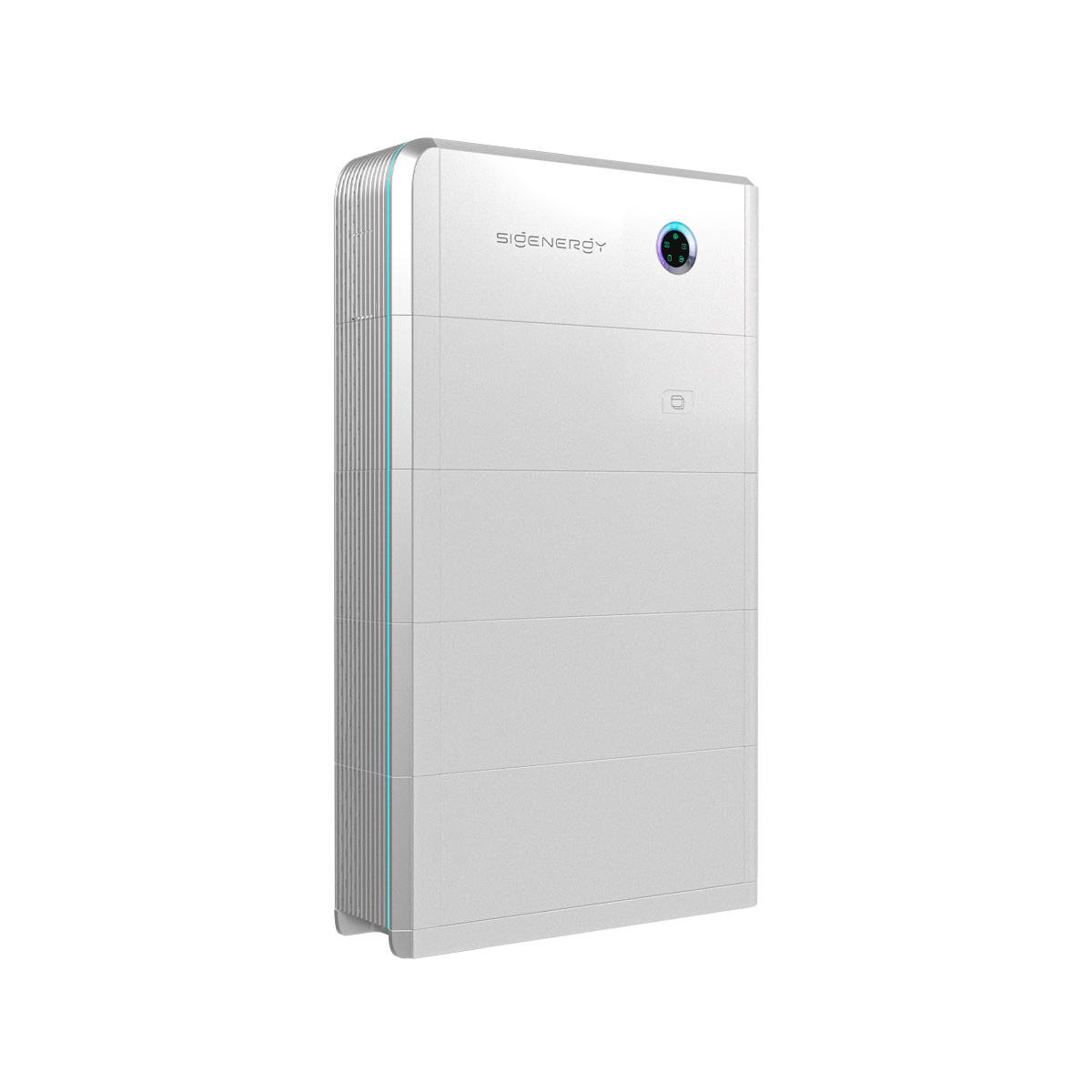
SigenStor is our featured choice for bringing storage, control and optional solar, backup and EV functions together. The reason to choose it is the fit with your plans—not a promise that it beats every alternative in every home.
SigenStor pairs an Energy Controller with stackable battery modules. Storage and controller power are separate design choices; expansion must follow the applicable compatibility and installation rules.
Confirm the exact generation, usable capacity, permitted stack and expansion terms in your quote.
Scheduling with context
Sigenergy describes AI-led energy management using tariffs, solar availability and patterns of use. Monitoring and settings help you understand where electricity goes, rather than treating the battery as a black box.
Confirm supported tariffs, connectivity, firmware and available features. Automation cannot guarantee savings.
Backup, deliberately designed
An appropriately configured Sigen Energy Gateway can enable backup with the controller and battery. Decide which circuits matter, how much reserve to hold, and how long the available energy can support them.
A battery alone is not a whole-home backup promise. Output limits, earthing, circuits and installation design matter.
Room for a wider energy system
The platform can integrate solar and an optional DC EV charging module. That makes SigenStor a useful starting point for a home whose energy needs may evolve.
The EV module is not standard in every package. Bidirectional operation needs compatible vehicles, hardware, permissions and supported functionality.
Ask for the exact specification
Model generations differ. Your quote should identify the controller, battery modules, usable energy, continuous power, included accessories, applicable warranty and supported features. A platform brochure is not a list of everything included.
06 / A SMART PURCHASE, STEP BY STEP
Buy the plan. Then the hardware.
01
Understand your baseline
Start with bills and, where available, half-hourly consumption. Separate winter and summer, weekday and weekend, existing loads and realistic future changes.
02
Test the options
Compare doing nothing, a smaller battery, battery-only, and solar-plus-storage using consistent assumptions. Include losses, export value and the cost of capital.
03
Check the property
Assess the supply, siting, access, clearances, environmental conditions, fire-safety requirements and grid connection. Backup needs a separate circuit and load assessment.
04
Specify what matters
Choose usable storage and continuous power together. Agree what backup, monitoring, EV integration and future expansion actually mean for this installation.
05
Read the terms
Review the written scope, exclusions, warranty conditions, throughput or retained-capacity terms where applicable, support arrangements and tariff eligibility.
06
Measure and refine
After commissioning, compare actual imported, exported and stored energy with the plan. Revisit schedules and reserve settings when tariffs or household use change.
Start with your home. Not a sales package.
Tell us about your electricity use, roof and priorities. Battery-only and solar-plus-storage deserve different conversations.
This is an educational guide, not a quotation, tariff recommendation or prediction of your return. Diagrams are illustrative. Model availability and software features can change.
Titan Eco SigenStor system overview (PDF) — modular platform, tariff-led control and backup overview. A supplier summary; confirm details against the exact model’s manufacturer documentation.
Different editions describe different module generations. No capacity or warranty from one edition is silently applied to another here. The interactive arithmetic is shown explicitly above and is independent of product performance claims.